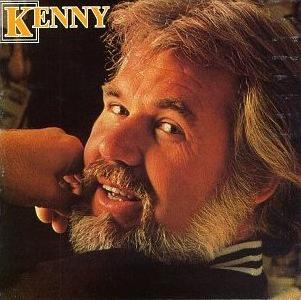
Kenny Rogers Discography
Promotional photo of Kenny Rogers and The First Edition in early 1968Background informationOriginCaliforniaGenres,Years active1967–1976 (reunions: 2010)Labels, Jolly RogersAssociated actsPast membersTerry WilliamsThelma CamachoMary ArnoldJimmy HassellJohn HobbsGene LorenzoKenny Rogers and The First Edition, sometimes billed as The First Edition, was an eclectic band whose styles ranged from to,. Its core members were (lead vocals and bass guitar), (drums and percussion) and Terry Williams (guitar and ). The band formed in 1967, with folk musician (guitar and backing vocals) and the operatically-trained Thelma Camacho (lead vocals) completing the lineup.As the was heating up, The First Edition signed with in the summer of 1967 and had its first big hit in early 1968 with the pop-psychedelic single ' (US No. 5).
After only one more chart hit, ' (US No. 19), the group, newly billed as 'Kenny Rogers and the First Edition', once again hit the top ten, this time in the summer of 1969 with the topical ' (US No. 6, UK No.2).For the next six years, First Edition bounced between, pop and, enjoying worldwide success. By the mid 1970s, frontman Kenny Rogers would embark on a solo music career, becoming one of the top-selling country artists of all time. Contents.Early days Kenny Rogers and The First Edition were mostly made up of former who felt creatively stifled.
The exception was Mickey Jones, who had been part of 's backing group on his first electric world tour. In 1967, with the help of Terry Williams' mother, who worked for producer/executive, they signed with Reprise and recorded their first single together, 'I Found a Reason', which picked up minor sales. Like much of the work by the original lineup, this was a distinctly contemporary composition with an intensely performed Mike Settle vocal.
Settle had first come up with the idea of forming the band as his work took on the characteristics of rock. Over the previous seven years, Mike had been writing decidedly more folk-oriented songs, most notably the oft-covered 'Sing Hallelujah'.It was their follow-up (sung by Rogers), the single ', that earned them their first brush with fame.
The single, with an arrangement by their producer that had playing the backward guitar intro and providing various psychedelic sounds, became a hit early in 1968, climbing to No. 5 on the. Terry Williams played the solo that later led to tell Kenny that it was his favorite record. The group's next three single releases failed commercially, as did their second album. The fall 1968 release ' (composed by Settle) possessed a unique brass-tinged country-folk sound, broadening their fan base. In the group's rendition on that aired on 8 December 1968, the audience was unwittingly fooled into clapping too soon, right after the but way before the real ending. The record peaked at No. 19 on the Hot 100 just under a year after 'Just Dropped In' was at its Billboard summit.According to Mickey Jones' book That Would Be Me, Thelma was fired from the group in late 1968 (soon after the release of 'But You Know I Love You' and the aforementioned Smothers Brothers television appearance, but before the record would chart on the Hot 100), after missing too many gigs and rehearsals.
For her part Thelma did not see it the same way. She has stated that while she always loved being with them in the studio, the road was too hard on her from a health and personal standpoint. Slowly growing apart from the others, Camacho began to feel restricted by the band in a number of ways. All agreed that the situation could not continue, and she was replaced by her roommate, Mary Arnold, an Iowa-born singer who beat out newcomer for the job.
Thelma appears on the first three LPs plus half of the fourth album. Mary made her debut on 'Reuben James'.By the end of the decade Rogers had long brown hair, an earring, and pink sunglasses. Known affectionately in retrospect as 'Hippie Kenny', Rogers had a notably smoother vocal style at the time. During the summer of 1969 the band scored another Top Ten hit with ' '.' 'Ruby' was the global smash that firmly established the First Edition's longevity in the business. Mickey's drumming was part of the hook. At Rogers' current shows, the song is often clapped along to, or joked around with, but it was meant seriously at the time.
Telling the graphic story of a crippled veteran was admirably daring at the height of America's involvement with the war in. The song lyrics were originally meant to address the, albeit in such a vague way that it could have referred to Korea, Vietnam, or even the Japanese invasion of. The song was picked up by some of the more attuned disc jockeys, and there was suddenly great demand to release the final track recorded for, and included on, the First Edition '69 album. In order to release 'Ruby' at the same time as the 'But You Know I Love You' soundalike 'Once Again She's All Alone', the group renamed themselves 'Kenny Rogers and The First Edition'. When 'Ruby' became the hit, the name stuck. Terry later claimed this made him feel like one of 's.Their prime 'Ruby' made them stars, and during the next two years, Kenny Rogers and The First Edition had five hits. A man Rogers at first took to be a rude fan first pitched 'Reuben James' to Rogers at a golf match.
The man, who turned out to be a song pitcher for American songwriter Alex Harvey followed him around the greens singing the song until Kenny listened. Rogers loved the song's look at a black man raising a white boy and agreed to record it. 'Reuben James' turned out to be another daring record; though not as big a hit as 'Ruby', it made a big impact on the First Edition's now sizable fan base. 'Reuben James' came out at the end of 1969, by which time Mike Settle had been gone for several months, in an effort to save his ultimately doomed marriage. During his absence he was replaced.
Vassy's style was a little more edgy than Settle's, allowing the band to explore different areas. It was now that Kenny and Terry, by default, became the leaders of the band. Kenny was in charge of the records, and Terry would take control of their stage presentation. The group continued to record country, rock, and folk by fairly equal measures, blurring the lines among the genres.
Kenny Rogers Wiki Discography
Along with, and, their records in the late 1960s brought country music to the city and rock and roll to the country. Even if Jones had not also discovered, the First Edition should get credit for being pioneers of a more modern blend of rockabilly called country rock.The First Edition reached what was arguably the peak of their fame with 'Something's Burning', a No. 11 hit in early 1970.
A blatantly sexual song, it was slightly hindered chart-wise by the controversy surrounding it. Regardless, Kenny's soft voice on verses and rock shouting on the chorus earned the group much acclaim. 'Burning' opened with a sample of an actual heartbeat played backward to replicate the song's rhythmic beat.Meanwhile, Terry Williams had begun to record some solo singles. A number of folk rock songs met with little success. He later switched to a more teen-oriented bubblegum sound that their manager felt would appeal to his fans.
Williams' 'I'm Gonna Sing You A Sad Song Susie' was part of the First Edition's next LP Tell It All Brother. The title track (also written by Harvey), which dealt with love and brotherhood, was a national top 20 hit and topped 's August 13, 1970 top 30 survey for one week. It was the first of many songs Kenny would sing (e.g., his solo ') that had elements of sadism under a gentle surface. Released a month or so after the, the song drew a standing ovation the night it debuted live.In addition to the band's continuing frequent appearances on television, songs by Kenny Rogers and The First Edition were featured in two 1970 films.
First up was the never released on record 'If Nobody Loved' for the camp political comedy Flap. A few months later they recorded 'Someone Who Cares' and 'A Poem I Wrote For Your Hair' to appear in the soundtrack for the romantic film Fools starring Jason Robards, Jr., and Katharine Ross. The Fools (soundtrack) was released in 1971.At the end of 1970, the First Edition had their seventh Top 40 hit with the Vassy-penned 'Heed The Call'. Another song about the need for brotherhood, it was seen as an uptempo counterpart to the balladry of 'Tell It All Brother.' The next single, 'Someone Who Cares', was taken from the Fools movie soundtrack.
Though scoring high on the easy listening charts, 'Someone Who Cares' failed to reach the pop top fifty. This ushered in a period during which the First Edition attempted to retool its image. Keyboard player John Hobbs was briefly in the lineup, but, though he played on future recordings, was not in the group long enough to appear on any album covers or publicity photos. His brief tenure was captured in the PBS television special Tell It All. The special provided an unusually in-depth look at the group, all of whom were at ease speaking in front of the camera. In mid-1971 the First Edition released a gospel single called 'Take My Hand', which barely scraped into the bottom of the charts.TV and later releases After the success of a pilot shot in late 1970, the fall of 1971 saw Kenny Rogers and the First Edition become hosts of their own television series. Later to be shortened to Rollin, this was a variety show that was taped in Canada (taking advantage of recently imposed requirements) which geared itself toward rock, blues, and folk performers and groups.
Unlike the more Las Vegas-styled, Rollin was focused on harder-edged guests like, veterans like, veteran Canadian based artists such as, and up and coming performers such as. The show also gave the First Edition a chance to do the comedy Kenny and Terry had long made a part of their act. Though it got good ratings, Rollin did have one ill side effect: the First Edition were now seen as television personalities instead of recording stars.
Terry Williams' signature song, 'What Am I Gonna Do', was to become the group's next single in late 1971. It was the first First Edition 45 not to chart since 1968.Recorded over six months in 1971, and released in March 1972, was written by future star and the First Edition's musical director and arranger Larry Cansler.
Cansler replaced Hobbs on stage during this period, but despite his large creative role here, and on Rollin' On the River, he was not promoted on either as a member of the group. The album was a country about a late 19th-century mining town, but unlike most like-minded projects of the era, all of the songs were based on fact. The sleeve and booklet of this two-LP set had genuine and period-styled photos depicting the era, with all of the lyrics presented in hand-written script. The music was critically well received, with all of the group (outside of Mickey) taking at least one lead.
The song chosen for a single was 'School Teacher,' an acoustic rhythm and blues song with a lead by Kin. In retrospect it's easy to understand the probable reasons the artistically valid 'School Teacher' didn't get past No. 91. Putting out a First Edition single where Rogers was not prominent had already shown itself to be a gamble, plus lyrics written to reflect the sexist views of the 19th century sounded odd outside of the LP's concept. 'The Ballad Of Calico' has since picked up a large cult following, but back in 1972 it was all but ignored. Frustrated by the falling sales (the album hardly sold at all), Vassy began to let a drinking habit get out of control. According to Mickey Jones' book That Would Be Me, Vassy was fired several months after the 'Calico's' release following a drunken backstage confrontation with Terry Williams.By early 1972, Gene Lorenzo replaced Larry Cansler on stage and was made a full First Edition member.
Jimmy Hassell joined the group about six months later to replace Kin. Lorenzo was a keyboard and piano virtuoso. Hassell was a hard rock singer similar to Vassy, and physically resembled a friend of Terry's, actor. Both fit in well, without making the public impression of the original members. Around the time the new members hopped on board, Rogers formed his own label, Jolly Rogers (distributed by, Rogers retained the name when he started his own publishing company as a solo artist) and the group left Reprise.Their first Jolly Rogers release was a late 1972 country LP called Backroads. The third single from the album, a version of 's 'Today I Started Loving You Again' reached the lower regions of the country charts in mid-1973.
Then came a soundtrack from Rollin'. Now in its second year, an album of live versions of the 'Calico' songs and hits like 'Ruby,' 'Reuben James' and 'Just Dropped In' could have sold quite well, bringing proven hits to the Jolly Rogers label at the same time. Instead, they delivered a set of cover songs, of which Kenny's remake of 'The Long and Winding Road' and Gene and Terry's reworking of Bach's 'Joy' were most notable. The album did not check the group's declining sales, and the TV show was soon canceled. The group increasingly played on the county fair circuit.It was decided that a new image far away from their TV persona was required. Monumental tried to give them just this.
Combining a wide variety of styles, it ranged from a Rogers-written rocker about prostitute 'Morgana Jones' (later rerecorded by Rogers for his album in 1978) to the nostalgic '42nd Street.' The later compared the New York of 1973 to the Broadway of the 1930s. As he would continue to do in his solo career, Rogers cloaked some mature subject matter with a gentle delivery. John-inspired medley of Alex Harvey compositions 'The Hoodooin' of Miss Fannie Deberry' (also re-recorded by Rogers for 'The Gambler') and 'The Ritual', was the LP's centerpiece. Though in tune with other music of the day, Monumental was one of their biggest sales failures in the United States, but in New Zealand it went gold. Following on the local success of 'Rollin' and the understated ballad 'Lady, Play Your Symphony,' Kenny's rocking nursery rhyme 'Lena Lookie' went to number six, and the group embarked on three New Zealand tours over the next two years. A documentary of their first trip, in late 1973, was aired as a 1975 TV special, Rollin Through New Zealand.As their domestic popularity continued to decline, Terry wanted to focus on the hard rockers that had done so well for them overseas.
Kenny disagreed, wanting a more conservative agenda. Kenny admitted in his book Making It With Music, that he perhaps should not have complained about MGM's poor distribution on a radio show, but despite their mounting problems, New Zealand continued to consider the First Edition as superstars. The problem was that they had to go halfway around the world to benefit from their success, and travel expenses ate a big chunk out of their profits. As a thank you they put together an album called I'm Not Making My Music For Money especially for their New Zealand fans. An LP of this title was to have come out in the US but MGM rejected it. The US LP was basically going to be the same but with two new cuts replacing the two songs reused from 'Monumental.'
Despite the retreads, the album did show continued development. A mix of new songs and remakes (possibly done because some songs were not available in New Zealand), 'Love Woman' was now a hard rock jam featuring Jimmy on lead. This arrangement was borrowed from the band's stage performances of 's 'Rockin' Through The Rye'. The ballads 'Dirty Work' and 'Daddy Was A Traveling Man' were a return to the more adult style of Terry's early work. 'Making Music For Money' (another song remade for 'The Gambler') is a song about art vs. Commerce that later covered.
It was the band's ironic last single. It charted well, but again only in New Zealand.The split A last-ditch effort to jumpstart their domestic careers was done in late 1974 when they filmed a television movie called.
A drama about the music biz, they played the group Catweazel. It was a small role with only Kenny and Mickey speaking any major lines. Despite the film giving them a chance to perform recent songs, the exposure did not halt their decline. Kenny had become short on money by 1974, and was in debt when he decided to hawk guitar lesson records on a commercial.Wanting to give a solo career a shot, Terry left in the late spring of 1975. Kenny was upset but agreed to it, succeeding in getting Kin to come back so they could fill their pending engagements.
Though he was hired to stay permanently, the reunion with Vassy did not go well and he ended up playing only one night. This more or less marked the point where The First Edition agreed to split. Mickey, realizing that it was time to move on, was the first to decide to leave in order to pursue his other dream, which was acting.
Though the group would finish their pending obligations, Kenny began recording as a solo act that fall. The First Edition played their last scheduled shows in the fall of 1975 at Harrah's in Reno. Without there were a few First Edition gigs in early 1976, done as a favor to Kenny who had not yet formed his solo band. Kenny later said that writing the song 'Sweet Music Man' made him cut his hair and let it go gray, plus get rid of the earring. The song may have played a part in his future middle of the road image, but the change did not happen until almost a year after it was written. Mary Arnold often sang 'Sweet Music Man' on the First Edition's post Terry Williams gigs and Kenny also tried the lead out a few times.
This was to become one of Rogers' most covered compositions, and he himself had a No. 9 country hit with it in the fall of 1977. Though unrecorded, 'Sweet Music Man' marked the end of the First Edition as a creative entity.After the split Considering the band's then low profile, Kenny Rogers had an uncertain future when he signed a solo deal to in 1975. Searching for a new image, he soon developed a more middle-of-the-road, gravel-voiced style. For the rest of the decade and beyond he had hit after hit. ' was the first of no less than a combined 25 number 1 country and pop singles after he left the group.
During his time with UA (later taken over by ) he topped the country and pop album charts for a grand total of 90 weeks and sold more records than anyone in country music. In 1983 his status as one of the world's top stars (of any musical genre) was confirmed when signed him for an advance sum of US$20 million, for six albums. Kenny Rogers continued to tour, including classic material by the First Edition in his performances, before retiring in 2017. In April 2013, he was inducted into the.Thelma Camacho did a few solo records in the 1960s and 1970s and one LP in 1980. She moved to Europe in the 1980s and lost contact with the rest of the group until 2010. Thelma also recorded in Europe under the name Tess Ivie (the latter being her husband's last name).
Today, she lives in California and runs a jewelry store.Mary Arnold married singer, after the two were introduced by Rogers, and now looks after his estate. She had performed with him for many years, and was recently inducted into the Iowa Rock And Roll Hall Of Fame.Kin Vassy died of lung cancer on June 23, 1994.
He scored two top 40 hit singles as a country singer, but his solo career never really took off. He often worked with Kenny in the 1980s and his trademark scream enlivens hits like 'Blaze Of Glory'. In 1980 he released the single 'Makes Me Wonder (If I Ever Said Goodbye)'; Kenny Rogers sang the backing vocals. The song was not a hit, but the following year Kenny recorded his own version of the song for his popular Share Your Love album, produced by; Vassy sang the back up on Kenny's version. He also worked with. Two years after he died, had a No. 28 hit on the U.S. Country survey with the Vassy penned '.Gene Lorenzo performed for some years with country star, then some more years with.
When Greenwood fired his band in 1987, Kenny asked Gene if he would like to join his stage band 'Bloodline' until he found a new group. Lorenzo stayed for roughly six months. He is still listed as a working musician.Terry Williams had one easy listening hit in 1980 called 'Blame It On The Night,' but it was on a small label. He worked extensively with Kenny in the 1980s and managed Kenny's successful Lion Share recording studios. Today Terry is mostly retired, on a farm in the Southeast. He now composes and sings Christian music.Kin and Terry fronted a new First Edition in 1993-94.
They continued on a few months after Vassy's death, but the circumstances were now too downbeat and they disbanded several months later. It was to be an attempt at relaunching the group as a contemporary country band who also played their hits. Terry's younger brother Ress played the drums.Having continued to write and perform, Mike Settle opened for The First Edition on their 1973 trek to New Zealand. He would go on to write several songs for the group's solo records over the years. By the 1980s, Mike had a lower profile in the music industry, and later became a journalist.
Now basically retired, his songs ('But You Know I Love You' in particular) continue to be covered by new artists.Jimmy Hassell worked for for a while and after Mary married he worked with them as well. He released one self-titled solo LP in 1976 which was reissued with one new song in 1978, and also wrote commercial jingles.
His biggest success as a solo artist came in 1977 when he produced the award-winning production show Sassy Class at the Stardust hotel. He died on January 6, 2004.Mickey Jones became the most visible member next to Kenny.
Focused more on acting, he was in many films and television shows over the years, including films such as. He also had a role in Tim Allen's for two seasons. He died on February 7, 2018.John Hobbs stayed in touch with the group and worked with Kenny, Terry, and Kin on Rogers' early 1980s solo work as well as other projects at Lion Share. He has remained an active session musician and arranger.The groups' long time arranger Larry Cansler had a successful career in the studios in Los Angeles scoring many movies (including The Gambler series), variety shows, ( the Smothers Brothers Comedy Hour) and many national commercials. He now lives in Arizona and continues to compose for symphony orchestras.In 1980, a compilation of some of the First Edition's greatest hits and album cuts, titled 'Shine On', was issued in the United Kingdom; it sold fairly well but was overshadowed by, a Kenny Rogers solo greatest hits collection that, in addition to his solo hits, featured reworkings of the group's best known songs.Currently there are many compilations of their work in print on various labels, some miscredited to Kenny alone with picture not of the period.'
Live Vegas '72' is the first new First Edition music to be released since 1974. The recording was a Kin Vassy era performance of an unknown date. Jimmy is oddly credited and there are other basic mistakes on the cover.The band scored a total of 11 hit singles and eight hit albums on the Billboard charts.On April 10, 2010, Kenny, Mike, Mickey, Terry, Mary, and Gene reunited as part of the Kenny Rogers: The First 50 Years TV special.
This was filmed at the Foxwoods Casino in Connecticut. They were joined by on a rendition of 'Just Dropped In'.The First Edition semi-reunited with Rogers several times in 2014-2015 when he was elected to the Country Music Hall Of Fame. These were brief press conferences and performances only.Discography Albums YearAlbumChart positionsCAN1967118——1968The First Edition's 2nd———1969The First Edition '69164——487—6142—1971Fools (soundtrack)———Greatest Hits5733Platinum155——1972118—————1973Rollin'———Monumental———1974(New Zealand Only)———2015Live Vegas '72 (500 vinyl only)———Singles YearSingleChart PositionsAlbumCAN CountryCANCAN AC1967'I Found a Reason'—————————The First Edition'—5———————1968'Only Me'—133———————The First Edition's 2nd'Charlie The Fer De Lance'—————————'Are My Thoughts With You?'
., 18 July 1981. ^. Archived from on 2011-10-03. Retrieved 2011-07-21. Retrieved 2011-07-21. ^.
Whitburn, Joel (2011). Top Pop Singles 1955–2010. Record Research, Inc. Retrieved 2011-07-21. Retrieved 2011-07-21. Artist: Croce, Jim & Bo Diddley with Kenny Rogers. Retrieved 2011-07-21.
CS1 maint: multiple names: authors list External links. at. '. '. '. '.
'. '. '. '.
' (with Dottie West). '. ' (with Dottie West). '. ' (with Dottie West). '. ' (with Dottie West).
'. '. ' (with Kim Carnes). '. '. '. '.
Multisim electronic workbench download win 10. '. '. '.
'. ' (with ). '. '. ' (with Dolly Parton). '. '.
'. ' (with Dottie West). ' (with Kim Carnes and James Ingram).
'. '. '. '. '. '.
' (with ). '.
Kenny Rogers Albums Sold
'. '.
'. '. '.
' (with ). ' (with Dolly Parton). '.
'. '. ' (with ). '. ' (with and ). '.
'. '. 'Guest singles.
Kenny Rogers Discography Mp3 Torrent
The History of Rock Music.