Manual Hho Generator
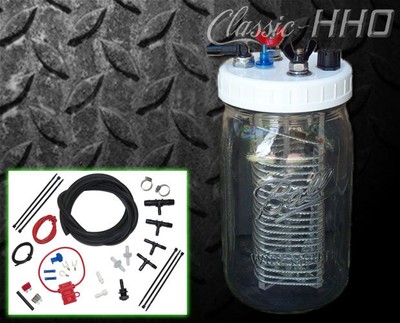
A Hydrogen generator uses a proton exchange membrane (PEM) to produce high purity hydrogen gas from water. The PEM cell was originally developed by NASA and is extensively used in industrial and laboratory applications.Hydrogen gas productionHydrogen is the most abundant element in the Universe, although in its gaseous state it does not naturally occur on Earth and must be manufactured. In industry, H 2(g) is produced on a large scale by a process called steam reforming, to separate carbon and hydrogen atoms from hydrocarbon fuels. Hydrogen is used in the laboratory for a variety of lab applications such as Gas Chromatography (GC) as fuel or carrier gas and ICP-MS as a collision gas, in the chemical industry to synthesise ammonia, cyclohexane and methanol and in the food industry for hydrogenation of oils to form fats.Significant research and development has afforded safer, greener, more efficient and cost-effective means of generating on-demand hydrogen gas for laboratory, manufacturing and industrial applications. Safety has improved so much that Hydrogen gas is now being used in some transport vehicles as a clean ‘pollution-free’ fuel with the gas being generated from water with the by-product of its combustion being water.This article provides answers to several OHS and FAQs collated from worldwide health, environmental, industrial, testing, medical and research laboratories regarding the safe use of hydrogen generators in the workplace. How does a hydrogen generator work?Electrolysis of water is the best method of producing high purity hydrogen gas on demand. The most important element of the generator is the electrolyser cell where the electrolysis reaction takes place.
Le-am aratat cercul mai mic si le-am spus: 'Uitati, asa arata curul vostru inainte sa intrati in puscarie pentru droguri'. Manele noi 2009 gratis 2012 decembrie.
The cell consists of two electrodes (an anode and a cathode), which are separated by the ion exchange membrane. To produce the highest purity of hydrogen up to up to 99.9995% purity, a platinum catalyst is used at the electrodes.When a continuous voltage is applied to the electrodes on the electrolyser cell, the following reactions take place: -Illustration of electrolysis in a PEM cellAt the anode (the positively charged electrode), the water molecules lose two electrons, forming an oxygen molecule and four hydrogen ions.Anode 2H 2O - 4e = O 2 + 4 H+The oxygen that is produced in this half of the reaction is safely vented to atmosphere from the back of the generator. The four hydrogen ions that have been produced then pass through the ion exchange membrane (attracted by the negatively charged cathode) and collect four electrons reducing them to two hydrogen molecules.Cathode 4H+ + 4e = 2H 2The hydrogen gas produced is separated from the oxygen by the ion exchange membrane, which is impervious to molecular oxygen. Why use a Hydrogen gas generator?Hydrogen gas generators are a safe, convenient and typically the more cost-effective alternative to using of H 2. A hydrogen generator will provide hydrogen of a consistent purity, eliminating the risk of variation in gas quality, which can impact on analytical results.A generator also produces gas on-demand around the clock, meaning that you don’t need to worry about running out of gas at an inopportune moment.

A hydrogen generator will free up more of your time since you will not need to spend time ordering and changing out replacement cylinders.A generator is an environmentally friendly alternative to cylinders, since once it is installed, the generator will not need to leave the laboratory, providing gas for laboratory applications with all maintenance carried out in the laboratory. The generator also reduces your laboratory’s carbon footprint, since there is no need for trucks to deliver replacement cylinders and remove empty cylinders.Hydrogen Carrier GasMany labs are now switching to hydrogen as a carrier gas as an alternative to, which is year on year.
Hho Generator Diy
Using hydrogen carrier gas can decrease average analysis time, increasing sample throughput, because hydrogen has a viscosity that is about half that of helium.